
First Presbyterian Church of Cranford Celebrates 175 Years of Faith and Community
Compiled by Laura L. Simone
About THE FIRST PRESBYTERIAN CHURCH OF CRANFORD
As the body of Christ empowered by the Holy Spirit, the First Presbyterian Church of Cranford, 11 Springfield Ave., Cranford, seeks to live God’s Word and inspire others to embrace Jesus’ commandment to love one another as the Lord loves us. Worship every Sunday at 10:00 am. Learn more at firstprescranford.org.

Long before Cranford had its own church building—or even its own identity as a town—families traveled by wagon, horseback, or on foot to attend worship in neighboring Westfield, then known as the West Fields of Elizabethtown. The roads were rough, the trip was long, and worship often occupied most of the day. Yet week after week, people made the journey because faith and community mattered deeply to them.
Over time, however, something became increasingly clear: the growing community along the Rahway River needed a church closer to home. That realization led to the founding of First Presbyterian Church of Cranford in 1851, beginning a story that has unfolded alongside Cranford’s own growth ever since.
Today, as the church celebrates its 175th anniversary, the story is not only about buildings or milestones. It is about people whose faith helped meet the needs of their own time while laying a foundation for the future.
In the mid-19th century, Cranford, then known as Craneville, was a rural village of farms, mills, and dirt roads. Presbyterians and Methodists, who had sometimes met for worship in a local schoolhouse, joined together in January 1850 to establish what would become Union Chapel. Land was donated by Josiah Crane, plans were drawn, and within a remarkably short time, the chapel was completed.
On March 3, 1851, worshippers gathered for the first service in “Union Chapel,” located near what is now Alden Street. Just a few months later, on June 26, 1851, the First Presbyterian Church of Craneville, Essex County, NJ, was officially formed.

At the time, the church seated fewer than one hundred people.
It would not stay that way for long.
As Cranford grew during the second half of the nineteenth century—fueled in part by the arrival of the railroad—the church grew alongside it. New families arrived, Sunday School programs developed and music became an increasingly important part of worship. The church’s centrality to community life deepened. The original Union Chapel quickly became too small.
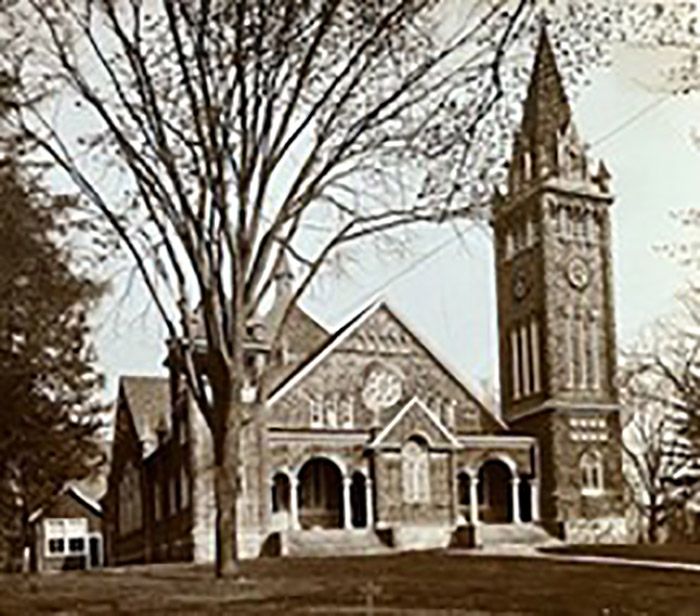
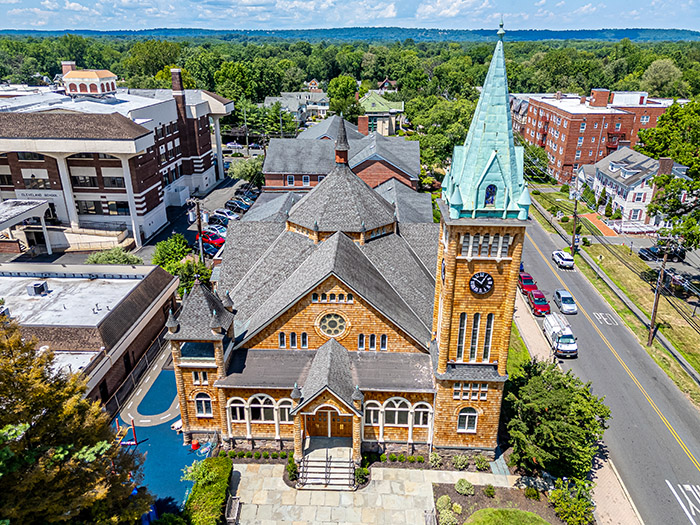
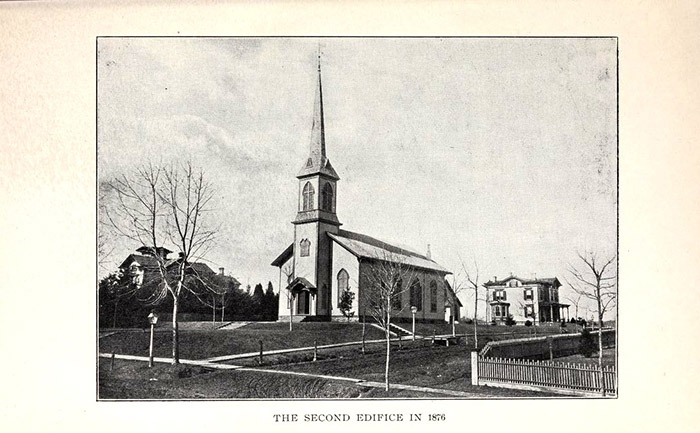
In 1869, a second church building was constructed on Springfield Avenue at the corner of N. Union Avenue. But even that building would eventually prove too small, leading to the construction of the church’s third and current sanctuary in 1894. With its distinctive Richardsonian Romanesque architecture and prominent towers, the building became a familiar landmark in the center of town.
Yet one of the most important chapters in the church’s history would come much later—in the middle of the twentieth century—through a vision that extended beyond worship services alone.
Under the leadership of Reverend Robert G. Longaker, the church entered another period of expansion that helped shape its modern identity. Recognizing that church life was about more than Sunday mornings, Longaker and church leaders envisioned spaces where people of all ages could gather throughout the week for Christian education, music, service, and community life.
That vision led to the construction of a Fellowship Hall in 1956 (later renamed Bates Hall in honor of Elizabeth Bates, the church’s first female Elder) and Memorial Hall in 1968.
For generations of Cranford residents, Bates Hall has been a familiar destination. Inside its walls, church members have gathered for dinners, youth group activities, and holiday celebrations. It has also been shared widely with the broader community. Boy Scouts, Cub Scouts, basketball clubs, and community organizations like the College Women’s Club have all found a home there.
Memorial Hall further expanded the church’s ability to serve the community by creating dedicated space for church offices, meeting rooms, education programs, and music ministry. Together, these additions reflected a forward-looking understanding that churches thrive when they become active centers of community life.
That mid-century vision continues to shape the church’s mission to serve others in practical and meaningful ways.
Since 1956, the Nursery School, founded by church member Helen Klase Baldwin, has welcomed young children into a caring and nurturing Christian learning environment. And in 1990, with the founding of PrimeTime School-Aged Childcare by church members, the classrooms found new life as a school aftercare program for families in town.
“With more women entering the workforce, the church started an outreach program to provide childcare forschool-aged children,” said Karin Burk, church member and PrimeTime’s first Director. “What started with 7 children, quickly grew to 200. Today, the program is so popular with Cranford families that it is waitlisted every year.”
What began with residents traveling dusty roads to worship in Westfield eventually became a congregation deeply rooted in Cranford itself—a church that grew alongside the town, expanded with its people, and has continually reimagined how it can serve the community around it.
Bates Hall is always busy—not just with PrimeTime, basketball and Scouts—but also with our meal ministry, the Cranford-Elmora Soup Kitchen. Volunteers gather twice a month to prepare 350 meals for those experiencing food insecurity. Long tables fill with sandwiches, fresh fruit, conversation, and shared purpose as people of all ages work side by side in service to others.
“The idea for a program to feed the homeless and hungry sprouted during a Bible study at the Elmora Presbyterian Church in Elizabeth,” said founder Jean Wands. “When that church closed in 2004, First Presbyterian Church of Cranford formally adopted the program as a mission of the church. Since then, the Cranford-Elmora Soup Kitchen has continued to serve the community, recently surpassing 166,000 meals served.”
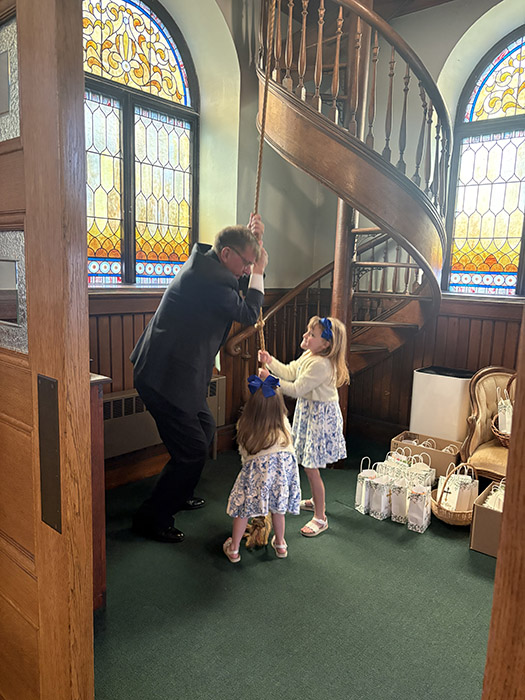
Generations of families have passed through the church’s classrooms, pews, and gathering spaces. In this recent photograph, a grandfather helps his young granddaughters ring the church bell donated 175 years ago by founder Josiah Crane—a small but powerful reminder that the church’s story continues to be carried forward, from one generation to the next.
What began with residents traveling dusty roads to worship in Westfield eventually became a congregation deeply rooted in Cranford itself—a church that grew alongside the town, expanded with its people, and has continually reimagined how it can serve the community around it.
In 2025, that commitment to both history and future generations took visible shape through a major exterior restoration of the church’s 1894 sanctuary. The project carefully returned the building’s architectural details to their original appearance, restoring features that had been altered over time and preserving one of Cranford’s most recognizable landmarks. The restoration was honored jointly by the Cranford Historical Society and the Cranford Historic Preservation Advisory Board, recognizing not only the building’s architectural significance, but also the congregation’s continuing investment in the life and history of the community.
“By the Grace of God, I arrived here at the right time to see this beautiful restoration of the cedar shakes, and to bear witness to the Holy Spirit at work in the hearts of our growing congregation,” said Rev. Jin Bae, the church’s pastor.
The buildings may have changed over time. The town certainly has.
But the desire that first inspired Cranford residents to establish a church closer to home—a longing for connection, faith, and community—remains very much alive today.